Open Hours
Faroooq Hospital DHA Lahore
- Monday to Friday
- 9am to 6Pm
- Saturday
- 9am to 2pm
- Sunday Off
Contact Us
For Consultation
Brain Aneurysm Coiling
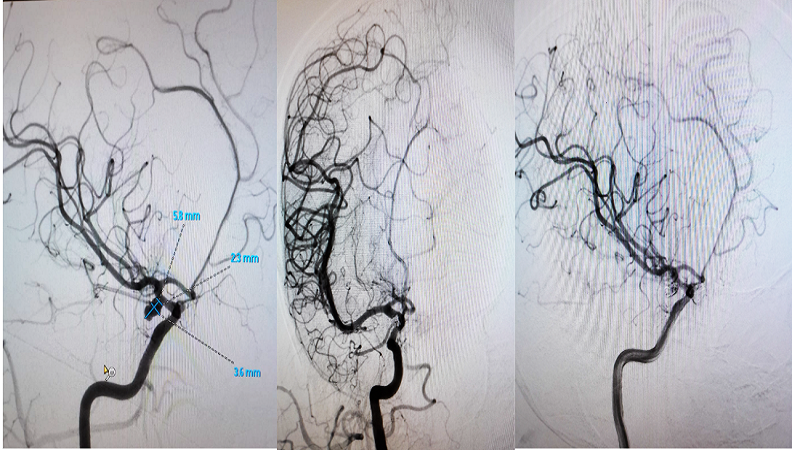
Brain Aneurysm Coiling
A brain aneurysm (also called a cerebral aneurysm) is a localized dilation or ballooning of a weakened intracranial blood vessel. Larger aneurysms have a greater risk of rupture, which can lead to bleeding into and around the brain. Ruptured aneurysms frequently cause sudden death; survivors often sustain significant neurological deficits. Hemorrhage from a ruptured aneurysm can produce ischemic injury and impair speech, motor function, and sensation.
Aneurysms commonly present in two morphologic patterns. A saccular aneurysm forms as a pouch projecting from one side of the vessel wall. A fusiform aneurysm involves circumferential dilation of the vessel wall. Aneurysms may also occur in the major head and neck vessels that supply the brain (the carotid arteries), and these carry comparable risks. The carotid arteries run anterior to the large neck muscle (sternocleidomastoid) and may be palpable as a lateral neck pulse.
Risk Factors
Factors that increase the likelihood of aneurysm formation or rupture include advanced age, a personal or family history of cerebral aneurysms, tobacco smoking, and certain systemic conditions such as autosomal dominant polycystic kidney disease and connective tissue disorders.
Symptoms
Many unruptured aneurysms are asymptomatic. When symptoms do occur, they may include:
- A sentinel or warning headache occurring days to weeks before rupture
- Unilateral pupillary dilation
- Visual disturbances or impairment of ocular motility
- Pain above or behind the eye, in the temple, occiput, or neck
Rupture of an aneurysm is a medical emergency that requires immediate care. Early manifestations of a ruptured aneurysm commonly include:
- Abrupt, severe headache—often described as the “worst headache of life”
- Neck stiffness
- Nausea and vomiting
- Photophobia (light sensitivity)
- Lethargy or decreased alertness
These symptoms may rapidly progress to altered mental status, loss of consciousness or coma, and, in some cases, seizures.
Treatment Options
At IR Associates, we prioritize prompt identification and treatment of cerebral aneurysms to prevent rupture or rebleeding. Our primary approach is endovascular embolization. During embolization, the aneurysm is accessed from within the parent vessel and occluded—typically by packing the sac with detachable coils—to prevent blood flow into the aneurysm.
For more complex or wide-neck aneurysms, we employ adjunctive endovascular techniques such as balloon-assisted coiling, stent-assisted coiling, and flow diversion devices. The choice of technique is individualized based on aneurysm anatomy, patient factors, and the goal of durable aneurysm occlusion while preserving parent vessel integrity.


Book your Appointment
To reserve your appointment now, simply fill the following essential contact details. Our representatives will contact you & confirm your appointment shortly.