Open Hours
Faroooq Hospital DHA Lahore
- Monday to Friday
- 9am to 6Pm
- Saturday
- 9am to 2pm
- Sunday Off
Contact Us
For Consultation
MECHANICAL THROMBECTOMY FOR STROKE
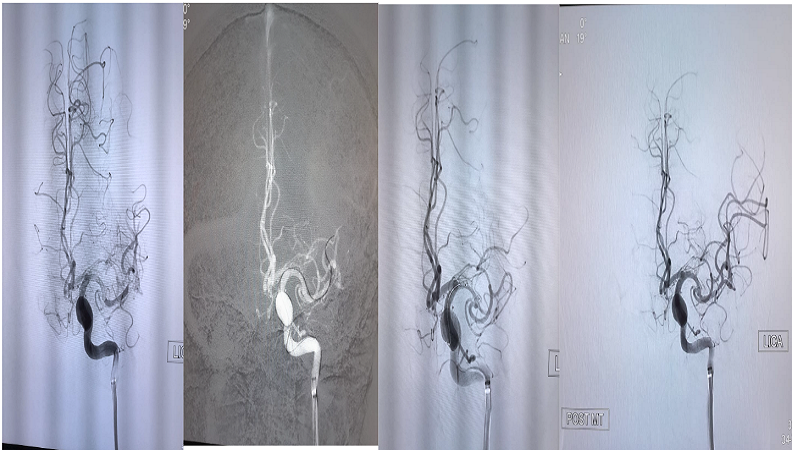
The IR Associates takes a multidisciplinary approach to treating stroke, bringing specialists in neurology and neurosurgery together to provide you with the most prompt and comprehensive care possible.
With each new patient, we immediately prepare the patient for testing and treatment. To address a stroke, we must immediately open the blocked blood vessel, which should restore blood flow to the brain and stop further damage. We may also provide supportive care in the form of oxygen therapy and precautions to prevent choking.
We offer our stroke patients specialized facilities, including a neurocritical care unit with state-of-the-art monitoring for post-procedure care, and a dedicated, state-of-the art acute stroke unit for ongoing evaluation and management. Our patients continue treatment in one of the intensive care units, being closely watched before transferring to step-down units or a general floor. In addition, our patients begin work with speech, occupational, and physical therapists shortly after admission. Our Team works closely with Rehabilitation to make sure the transition goes smoothly. Patients continue under the care of their Stroke Center neurologist even after discharged, providing critical continuity of care.
Advanced Treatment for Stroke
Mechanical thrombectomy for stroke is an urgent, minimally invasive procedure that uses catheter-based devices under X-ray guidance to physically remove a blood clot from a blocked brain artery. It is the standard treatment for certain acute ischemic strokes caused by a large vessel occlusion, aiming to restore blood flow, limit brain damage, and improve a patient’s functional recovery. The procedure involves inserting a thin tube, or catheter, through an artery in the groin or wrist, advancing it to the clot, and using a device to capture and remove the thrombus.
How it works
- Access:
A catheter is inserted into an artery, typically in the groin (femoral artery) or wrist.
- Guidance:
Real-time X-ray imaging guides the catheter through the bloodstream to the blocked artery in the brain.
- Clot Removal:
A specialized device, such as a stent retriever, is deployed through the catheter to attach to and retrieve the blood clot (thrombus). Suction devices may also be used.
- Restoration of Blood Flow:
By removing the blockage, the procedure restores blood flow to the affected area of the brain.
Why it’s important
- Improves Outcomes:
Mechanical thrombectomy has proven to be highly effective, reducing the severity of stroke and increasing the likelihood of a patient returning to their pre-stroke level of function.
- Timely Intervention:
The benefits are most significant when performed as quickly as possible after the onset of symptoms.
- Treats Large Vessel Occlusions:
It specifically targets severe strokes caused by blockages in the brain’s major arteries.
Who is it for?
- Patients with an acute ischemic stroke caused by a large vessel occlusion in the brain.
- Patients who can receive the treatment within the established time window, often up to 24 hours from the time they were last known to be well.
Key Goal
The ultimate goal is to restore blood flow to the brain, which can help to limit the extent of brain damage, prevent death, and minimize long-term disability.
Stroke Warning Signs
Learn to recognize common stroke symptoms. If you notice one or more of the following symptoms in yourself or another person, call 9-1-1 or your local emergency medical services number immediately. You must get to the nearest hospital emergency department, preferably one that has a “dedicated” stroke facility.
Warning signs of stroke include:
- Sudden numbness or weakness in the face, arm or leg, especially on one side of the body
- Sudden confusion and trouble speaking or understanding
- Sudden trouble with vision in one or both eyes
- Sudden difficulty walking, dizziness, and loss of balance or coordination
- Sudden severe headache
Not all these symptoms occur with every stroke but you must act quickly if you suspect you or someone is having a stroke. Early treatment is the most effective
Stroke A life Threatening Emergency
Every stroke is a life-threatening emergency. Time is critical. To increase your chances of minimizing a stroke’s impact, take immediate action:
- Recognize the warning signs and note the time when they first occur. Call 1122 Tell the operator that you or the person you are with is experiencing stroke symptoms.
- Get early assessment and pre-hospital care by emergency medical service personnel.
- Tell emergency medical service personnel to take you to a “designated” hospital stroke center or emergency department equipped and staffed to diagnose and treat stroke.
- At the hospital, get a prompt evaluation by a stroke specialist and appropriate treatment to restore blood flow to the brain. Adhere to all follow-up care your stroke specialist recommends.


Book your Appointment
To reserve your appointment now, simply fill the following essential contact details. Our representatives will contact you & confirm your appointment shortly.